Intensive international cooperation at the University of Lomza is taking on a new dimension. In recent days, Zbigniew Dziekoński, a representative of the International Relations Department, visited the German partner institution Hochschule Fulda, focusing on developing existing relations and concretizing the academic exchange offer under the Erasmus+ program.
Monday's program of the visit was dedicated to official presentations of both universities, a campus tour, and strategic talks at the university's international relations department. With María Campuzano López (Erasmus+ Institutional Coordinator) and Karolina Pander (Support of International Researchers), they discussed in detail the forms of class organization, living costs in both cities, and comprehensive logistical support dedicated to incoming international students.
Tuesday brought key arrangements and the official launch of close cooperation with two departments of the German university: the Department of Food Technology, represented by Swati Bajaj, and the Department of Applied Computer Science, represented in the meetings by Tatiana Blomer. As a result of the discussions, concrete exchange frameworks were agreed upon. Student exchanges will be launched with two places in each direction, as well as staff mobilities covering four places in each direction, including two for academic staff and two for administrative staff. Furthermore, in May of next year, University of Lomza students will be able to take advantage of short trips within Blended Intensive Programme (BIP) projects in areas such as dietetics, food safety and certification, computer science, and automation and robotics. For staff, participation in two dedicated Staff Weeks has been planned.
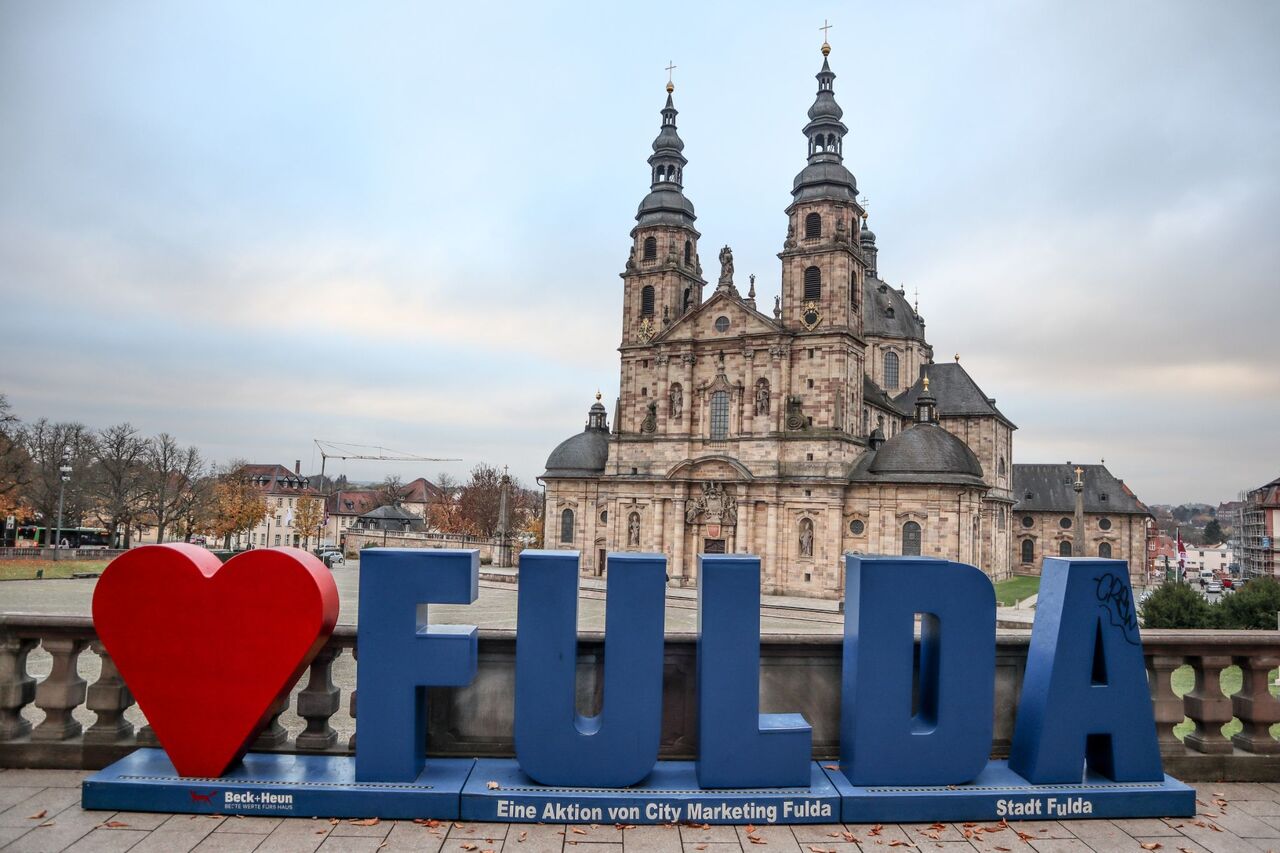
The visit was also an opportunity to experience study conditions in Fulda itself. Located in central Germany in the federal state of Hesse, the city enjoys excellent transport connections to the country's largest centers. With a population of about 70,000, Fulda is famous for its rich baroque architecture, including the City Palace and St. Saviour's Cathedral, and the university campus itself combines modern teaching facilities with renovated, historical buildings from an earlier period, located near the well-known "Point Alpha." It is also worth noting that all the international coordinators with whom talks were held have themselves participated in the Erasmus+ program in the past, which is the best proof of how international mobilities open new perspectives and build lasting scientific relationships.