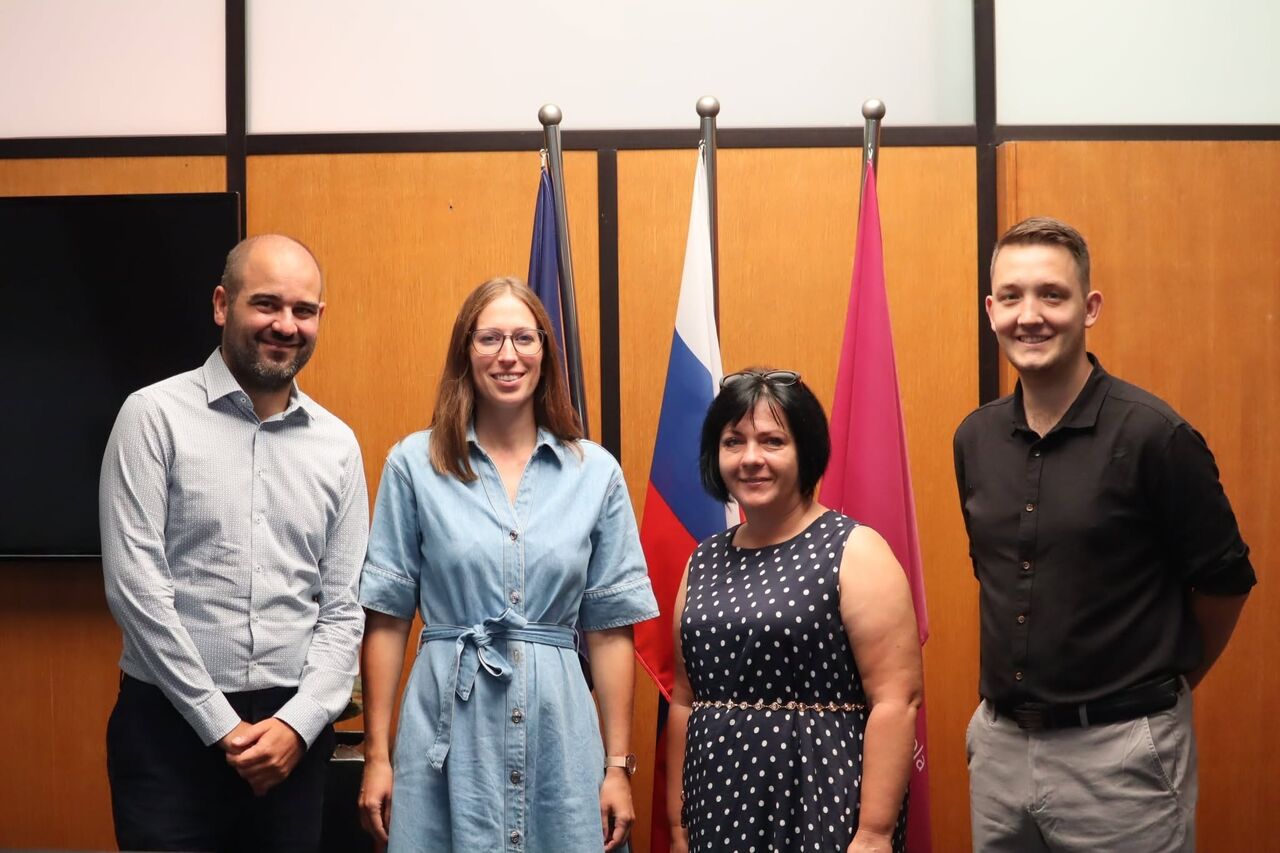
From August 18 to 20, 2026, representatives of the Faculty of Health Sciences and the International Relations Department at the University of Lomza visited Academia Higher Education Colleges in Maribor, Slovenia. The trip, carried out under the Erasmus+ program, brought further measurable results in the area of international academic exchange and the development of institutional relations.
A key point of the visit was talks with the director of the Slovenian institution and vice-president of the Association of Slovenian Higher Vocational Colleges, Žan Dapčevič. The meeting was attended by the representative of the International Relations Department, MA Zbigniew Dziekoński, with whom prospects for developing existing relations were discussed. A direct result of these talks is securing a new, valuable internship placement for our university's students, who will be able to gain professional experience within the administrative structures of the foreign partner in Maribor.
The program of the visit also included a campus tour and working meetings led by Barbara Jozičić, Project Manager in the international cooperation office. During the discussions, the framework of planned Blended Intensive Programme (BIP) projects was outlined, and the University of Lomza declared its participation in two projects scheduled for 2026.
An essential element of the mission was also the presentation of our university's educational potential. MA Barbara Dziekońska presented the profile of the Faculty of Health Sciences and detailed the functioning and modern facilities of our Medical Simulation Centre (MSC). The presentation met with high appreciation from the hosts and resulted in a concrete initiative—an inquiry regarding the possibility of the University of Lomza hosting a foreign trainee interested in the operation of the MSC from an IT perspective.
The visit to Slovenia confirms that active participation in the Erasmus+ program genuinely translates into the development of our university's international offer, creating unique opportunities for growth for both students and academic staff.