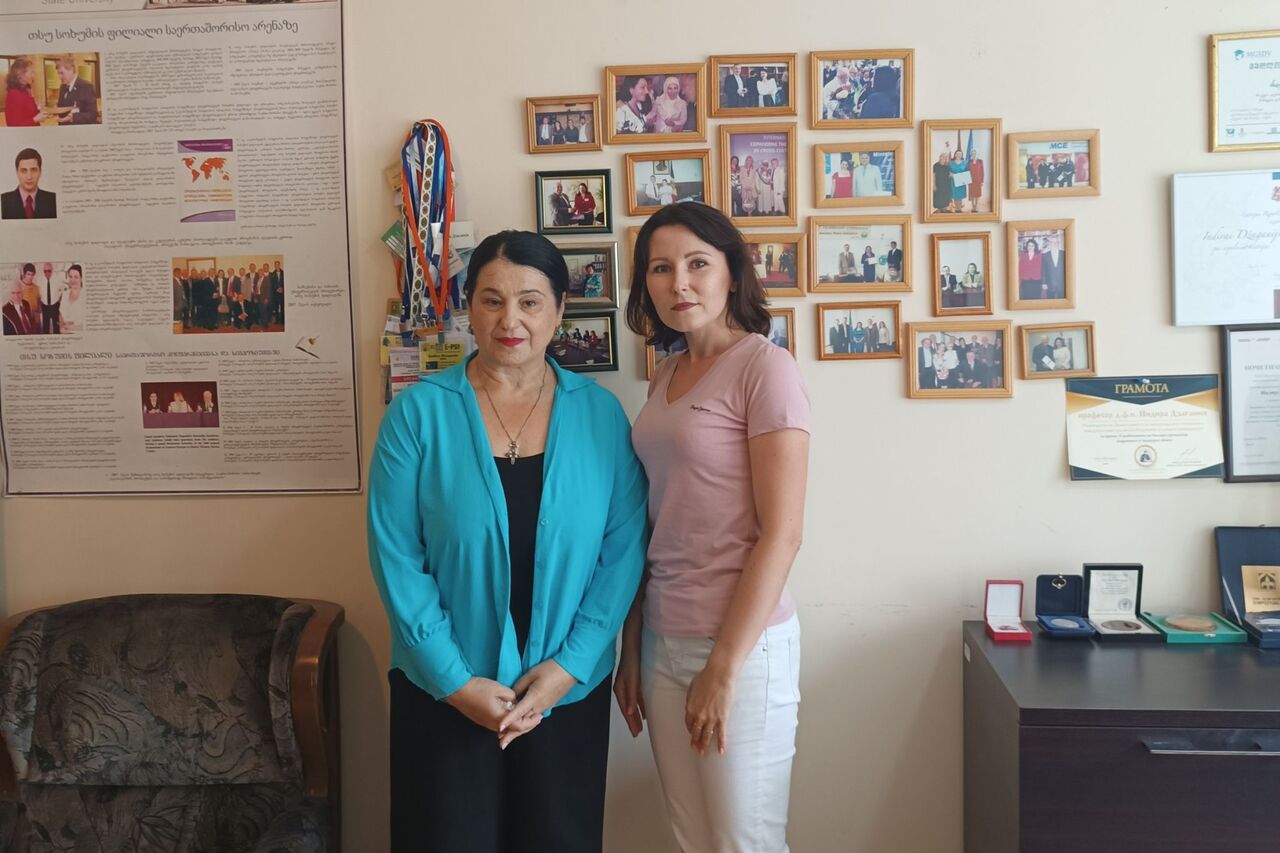
From July 6 to 10, 2026, Ph.D. Eng. Emilia Szabłowska from the Faculty of Health Sciences participated in a training mobility (Staff Mobility for Training) implemented under the Erasmus+ program. The mobility took place at Sokhumi State University in Tbilisi (Georgia) and marked another step in the development of international cooperation and the exchange of experiences between universities.
The main purpose of the visit was to become acquainted with the host university's activities, exchange experiences in conducting scientific research and implementing projects, and identify opportunities for the further development of interinstitutional cooperation. The program of the stay included meetings with representatives of Sokhumi State University, during which the scientific and didactic activities of both institutions were presented, and prospects for future cooperation were discussed. Ph.D. Eng. Emilia Szabłowska also had the opportunity to visit selected organizational units of the university, allowing her to familiarize herself with the available infrastructure and the organization of scientific activities. An important point on the agenda was also the exchange of experiences regarding the preparation and implementation of international projects, including those funded by the Erasmus+ program and other initiatives supporting scientific and academic cooperation. The meetings also helped identify potential areas for joint didactic and research ventures.
An important aspect of the trip was also observations related to the scientific interests of Ph.D. Eng. Emilia Szabłowska. A significant portion of her research focuses on the use of acorn flour as an innovative raw material with potential application in functional foods and in the development of products with enhanced nutritional value. Her stay in Georgia created an opportunity to expand her knowledge regarding the diversity of oak species occurring outside Central Europe and their potential significance as a source of raw material for further research.
Mobilities implemented under the Erasmus+ program are not only an excellent opportunity to exchange experiences, but also a chance to discover new cultures, traditions, and communities. The stay in Tbilisi was a remarkable experience—it is an exceptionally diverse city where history harmoniously intertwines with modernity. Characteristic elements of Tbilisi's landscape are the historic streets of the Old Town with traditional architecture and numerous temples, adjacent to extensive housing estates built during the Soviet era and modern districts with dynamically developing infrastructure. This mosaic of architecture and cultures perfectly reflects the city's centuries-old history as a meeting place for various nations and traditions. An unforgettable experience was also discovering Georgian cuisine, famous for its exceptional variety of flavors and hospitality. Traditional dishes such as khachapuri, khinkali, and aromatic dishes with fresh herbs and spices constitute an important element of Georgia's cultural heritage, allowing a better understanding of local customs and the lifestyle of its residents.
A particularly valuable experience was a visit to the National Botanical Garden of Georgia, where one can explore a rich collection of trees and shrubs representing the flora of the Caucasus and other regions of the world. Among the presented species are Quercus macrocarpa (bur oak) and Quercus ilex (holm oak), which differ noticeably in botanical traits from native oak species found in Poland, such as Quercus robur or Quercus petraea. The opportunity to directly observe these species provided interesting inspiration for further reflections on the variability of fruit characteristics among various representatives of the genus Quercus and their potential use in research concerning the technological and nutritional properties of acorn flour.
The participation of Ph.D. Eng. Emilia Szabłowska in the Erasmus+ training mobility confirmed that international cooperation is a crucial element of the university's scientific and didactic development. The trip enabled not only the exchange of experiences and the establishment of new academic contacts, but also provided valuable research inspiration and allowed for a deeper appreciation of Georgia's culture and heritage. The acquired experiences will serve as a valuable foundation for the implementation of subsequent joint scientific and educational initiatives on an international scale.