
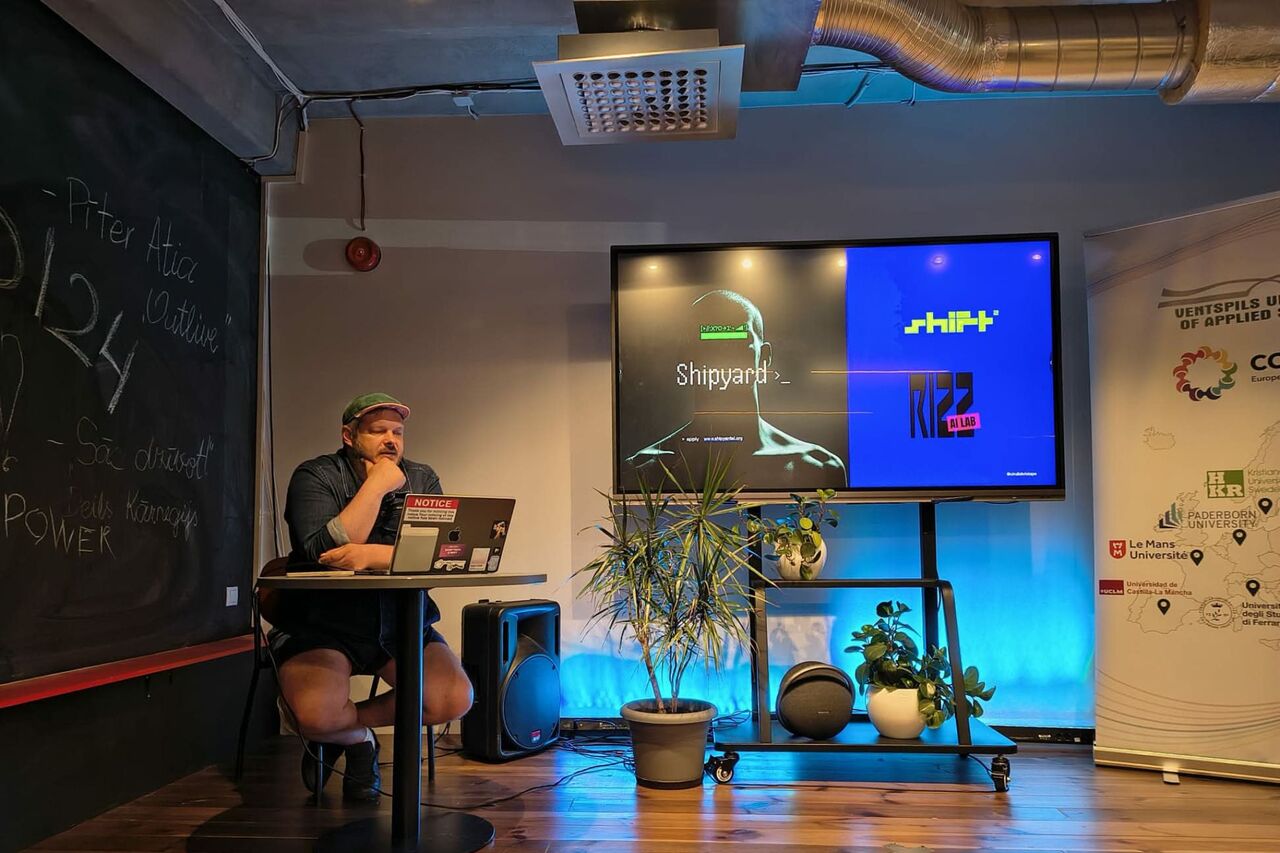
The Faculty of Computer Science and Technology at the University of Lomza has reasons for great pride. Three talented female students of Computer Science participated in a prestigious international startup development programme, undergoing an intensive, multi-day business and technology marathon. The entire venture aimed to transform innovative ideas into real digital products and prepare young engineers to enter the global technology market under the guidance of esteemed experts, mentors, and investors.
The highly demanding programme began with a detailed review and presentation of the progress of the startup projects carried out by individual teams. Participants from all over the world presented the development of their ideas, developed business assumptions, target groups, and the current stage of product and prototype preparation. An important inaugural element consisted of presentations by special guests. Dāvis Benefelds led a session on the practical use of artificial intelligence in the process of creating digital products, prototyping, and developing startups, discussing the possibilities of using advanced AI tools to streamline project work and build application concepts faster. In turn, Gustavs Mārtiņš Upmanis focused on a systemic approach to designing web platforms and applications, paying special attention to the importance of planning functionalities in advance and predicting user needs even before the coding stage begins, which effectively limits the number of later changes and costly revisions.
The following days brought an even greater intensification of activities. After morning team meetings and brief progress summaries, the students participated in a session led by Igors Uhags on the strategic transition "from prototype to product" and scaling the MVP (Minimum Viable Product), with a particular focus on the problems that arise alongside the dynamic growth of a project. Theory immediately gave way to practice as the teams began preparing for the PH Hunt challenge, developing ideas and planning long-term activities. Commercial knowledge was complemented by Gatis Romanovskis, CEO of Animas, who in his speaker session discussed sales, B2B Go-to-Market strategies for startups, and ways to effectively present and validate a product on the market. The second part of this stage was entirely dedicated to building physical prototypes, project iterations, and strengthening teamwork. Following the evening summaries and analysis of the technical problems encountered, the organizers took care of balancing the workload by inviting participants to outdoor integration activities, including a game of disc golf and other sports.
The true climax of the intra-programme struggles turned out to be the dedicated PH Hunt Day, during which the entire day was subordinated to grueling work on technological solutions. In the morning, after discussing the results achieved during the previous evening, the teams rushed into the main programming phase, building successive functional elements of the application. The afternoon block brought a dose of knowledge from the venture capital field—Kristaps Cirulis led a lecture on market size analysis, acquiring capital investments, and building strategic partnerships. Immediately after, a crucial presentation was dedicated to the art of pitching to investors, analyzing the structure of an ideal speech, storytelling techniques, and mechanisms for handling difficult questions during the Q&A panel. Armed with this knowledge, the students focused on testing their projects with real users and gathering feedback, which seamlessly transitioned into a night working session to refine the projects for the next selection stages.
The semi-finals day was accompanied by immense concentration and the polishing of presentations. From early morning, final corrections were being made to the code and the business structure of the solutions. Subsequently, the teams repeatedly practiced their final pitch, paying attention to every minor technical and visual detail. After lunch, the official semi-finals began before a demanding panel of mentors, where all the teams presented the results of their work, receiving a rigorous but extremely valuable substantive assessment of their project execution. At the end of the day, the verdict was announced, which brought great joy to our delegation—the team representing the University of Lomza was among the elite group of the TOP 5 best teams of the programme, winning a well-deserved advancement to the grand finale, which meant continuing intensive preparations throughout the entire following night.
The grand finale, the ceremonial Demo Day, took place in the capital of Latvia—Riga. After arriving early at the venue, our University's representatives used the final minutes to fine-tune the details of their presentation. During the main part of the event, the five best teams presented their innovative projects in the form of professional, dynamic pitches before gathered investors and an international jury. The presentations were followed by a highly demanding question-and-answer session, during which the computer science students precisely defended their assumptions, answering questions regarding the operational model, system architecture, market potential, and scalability of development. The event culminated in an official award ceremony, a summary of the programme with a discussion on further commercialization opportunities, and an inspiring networking panel, during which our students held direct talks with investors and mentors, building the foundations for their future careers in the technology industry.