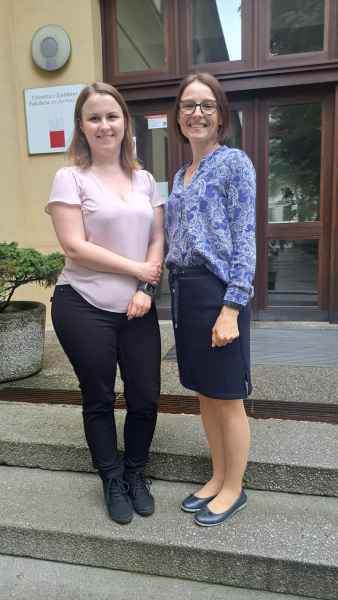
From 3 to 5 May 2026, Dr Patrycja Mościcka, Head of the Department of Cosmetology at University of Lomza, carried out a teaching mobility within the Erasmus+ STA programme (Staff Mobility for Teaching) at the University of Ljubljana, Faculty of Pharmacy, Department of Pharmaceutical Technology. The mobility was coordinated on the partner university’s side by Professor Alenka Zvonar Pobirk, Head of the Cosmetology programme at the Faculty of Pharmacy. This academic field, corresponding to cosmetology studies in Poland, focuses primarily on cosmetic technology, formulation science, and innovative solutions combining cosmetology and pharmaceutical sciences.
The main purpose of the visit was to conduct teaching activities in the fields of cosmetic science and pharmaceutical technology, with particular emphasis on modern cosmetic formulations, methods for evaluating product efficacy, and advanced systems for delivering active substances into the skin. The mobility also aimed to strengthen academic cooperation between University of Lomza and the University of Ljubljana through the exchange of teaching, scientific, and organisational experience.
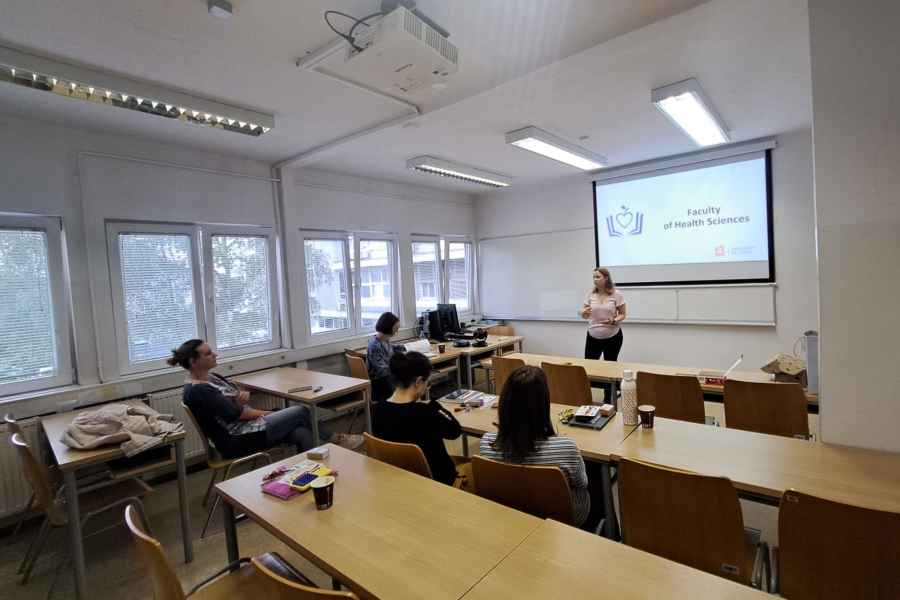
During the stay, Dr Patrycja Mościcka delivered a presentation introducing the University of Lomza and the Faculty of Health Sciences, presenting the educational and scientific activities carried out at the institution to students, doctoral candidates, and academic staff of the partner university. The teaching programme also included lectures devoted to the cosmetics industry in Poland, current trends in cosmetic formulations, and modern raw materials used on both the Polish and international markets.
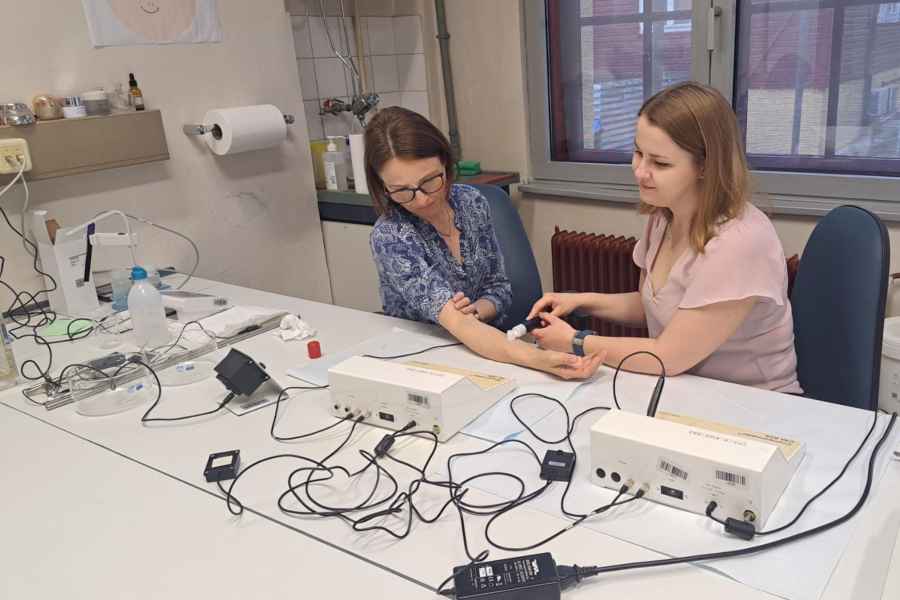
The programme offered by the host university included topics related to instrumental and in vitro methods for evaluating cosmetic efficacy, studies on skin permeation of substances, the use of cell cultures in cosmetic research, and modern active ingredient delivery systems, including lamellar liquid crystal structures. An important part of the meetings was also devoted to formulation strategies used in designing cosmetic creams and gels, as well as the impact of raw material quality and type on the effectiveness of the final product.
The mobility played an important role in strengthening international cooperation and the internationalisation of the educational process at both universities. The exchange of experience allowed participants to view cosmetology as an interdisciplinary field combining pharmacy, cosmetic chemistry, and skin biology. The visit also created opportunities for discussions about future joint teaching and scientific initiatives.
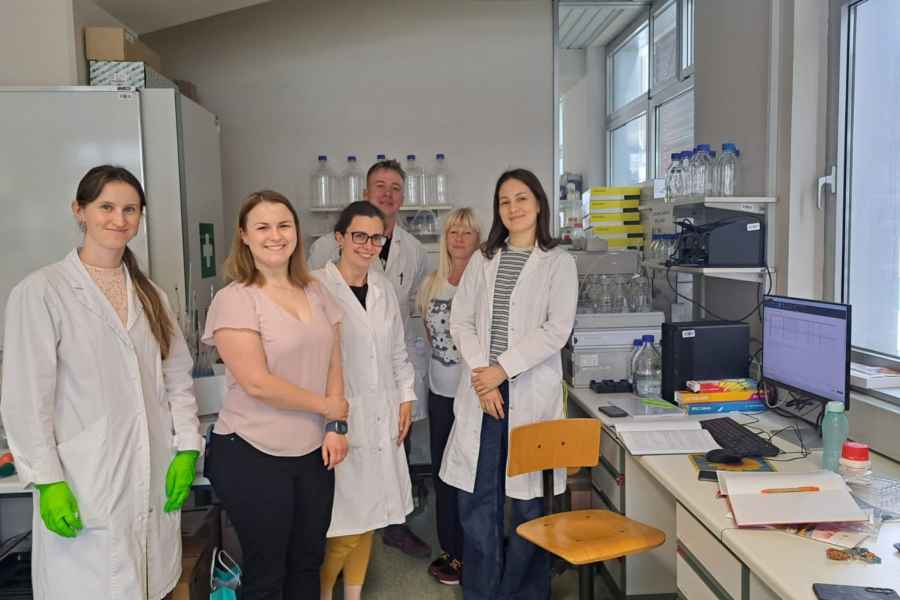
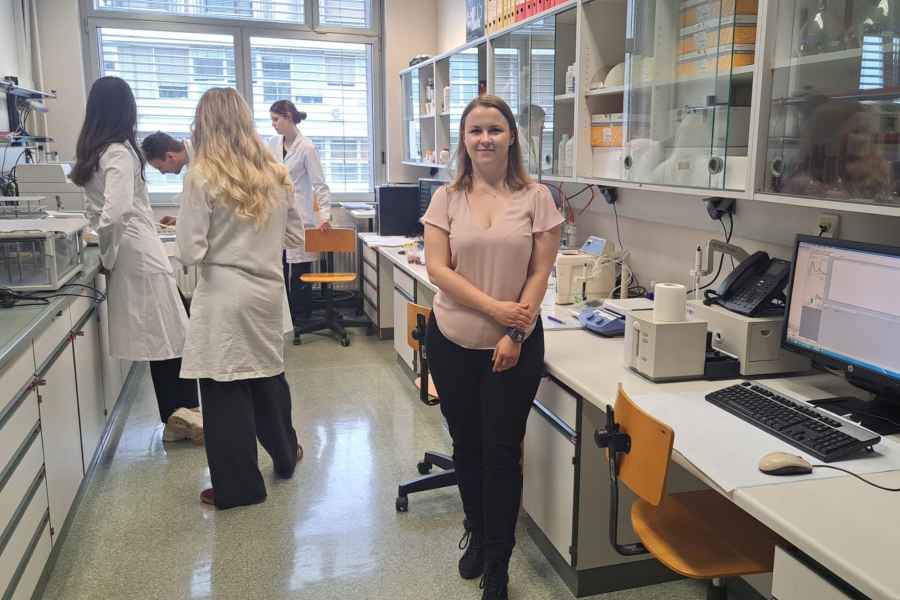
A particularly inspiring aspect of the stay was the opportunity to become familiar with modern research methods used in the laboratories of the University of Ljubljana. The presented technological solutions and approaches to scientific research became a valuable inspiration for further development of research activities and the implementation of innovative teaching methods at University of Lomza. Dr Patrycja Mościcka emphasised her hope for continued long-term cooperation between the two universities, both in the field of education and within future joint research projects and international initiatives.
During the journey, the green travel option promoted within the Erasmus+ Programme was also used, encouraging more environmentally friendly means of transport. This approach not only helped reduce the environmental impact of the trip but also provided an opportunity to explore more places and experience Slovenian culture.
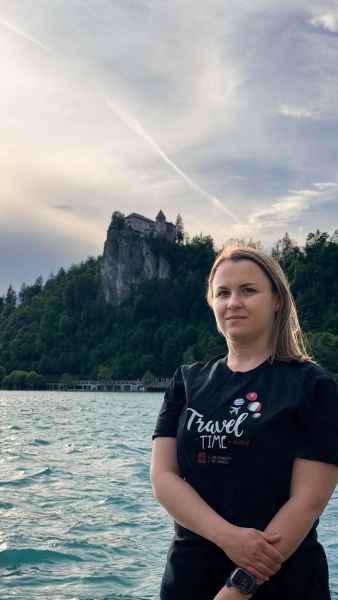
After the teaching activities, Dr Patrycja Mościcka had the opportunity to discover the remarkable natural beauty of Slovenia. Particularly impressive were visits to Triglav National Park and the picturesque Vintgar Gorge. Unforgettable experiences also included a visit to Lake Bled, a walk through the charming city of Ljubljana, and exploring the impressive Postojna Cave, which left a lasting impression thanks to its scale and extraordinary natural rock formations. The richness of nature and the harmonious combination of tradition, modernity, and environmental care made Slovenia a truly memorable destination.
The mobility had a clearly developmental character and opened new perspectives for academic cooperation. It enabled the comparison of different approaches to teaching and research in the field of cosmetology and encouraged reflection on future directions for the development of education and scientific research. The experiences gained during the mobility serve as an impulse for implementing innovative solutions and seeking new methods of working with students and conducting scientific projects.