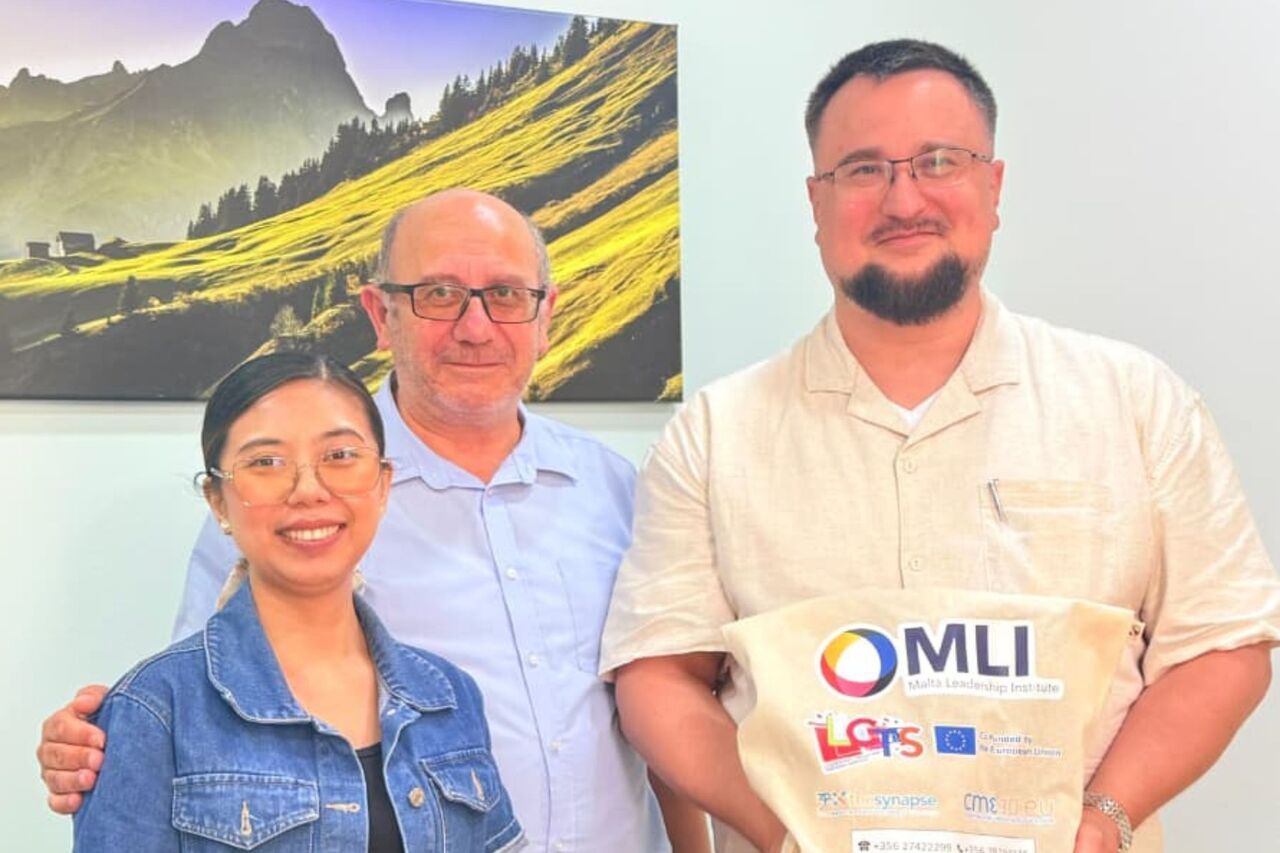
From 22 to 24 April 2026, Radek Wierzbicki, a staff member of the University of Lomza from the Faculty of Social Sciences and Humanities and an expert in entrepreneurship, technology startups, and international projects, took part in an Erasmus+ Staff Teaching Mobility carried out in cooperation with the Malta Leadership Institute.
During the visit, meetings were held with representatives of the Malta Leadership Institute, including Jesmond Friggieri, Chief Executive Officer of MLI, and Jane Ilagan, Head of Projects and Erasmus Office. The discussions focused on opportunities for further cooperation within the Erasmus+ programme as well as potential joint projects. Considerable attention was also given to modern education models, the development of future skills, and cooperation between higher education institutions, business, and the social environment.
During the visit, a more “field-based” observation regarding Malta as a country also emerged. As Radek Wierzbicki noted, “Malta attracts a large number of immigrants for work and sees this as a competitive advantage.” He also pointed out that students often take short-term jobs abroad, where they gain experience and professional contacts that later become valuable in developing their own ventures, which are frequently registered in Malta. He also highlighted the fact that many companies, including those from the United States and India, choose to establish operations in Malta, which is linked not only to the use of English as an official language but also to a well-optimized tax system that supports international business activity.
The discussions also covered a range of current social and educational topics. These included the security of Central Europe in the context of the geopolitical situation, the impact of climate change on agriculture and the food processing sector in north-eastern Poland, as well as migration, social integration, and the mental well-being of students. Particular attention was also paid to the role of digital technologies, social media, and gaming in education, and their influence on students’ concentration and motivation.
A significant part of the discussions concerned potential research collaboration on the impact of digital technologies on education and student well-being. The University of Lomza could act as a partner responsible for analysing learning processes and the impact of digital tools, while the Malta Leadership Institute would contribute expertise in mentoring and adult education. The second area focuses on basic skills, which are crucial for innovation and economic development, where cooperation could include research activities, analysis of educational needs, and testing models for skills development in regional academic environments.