
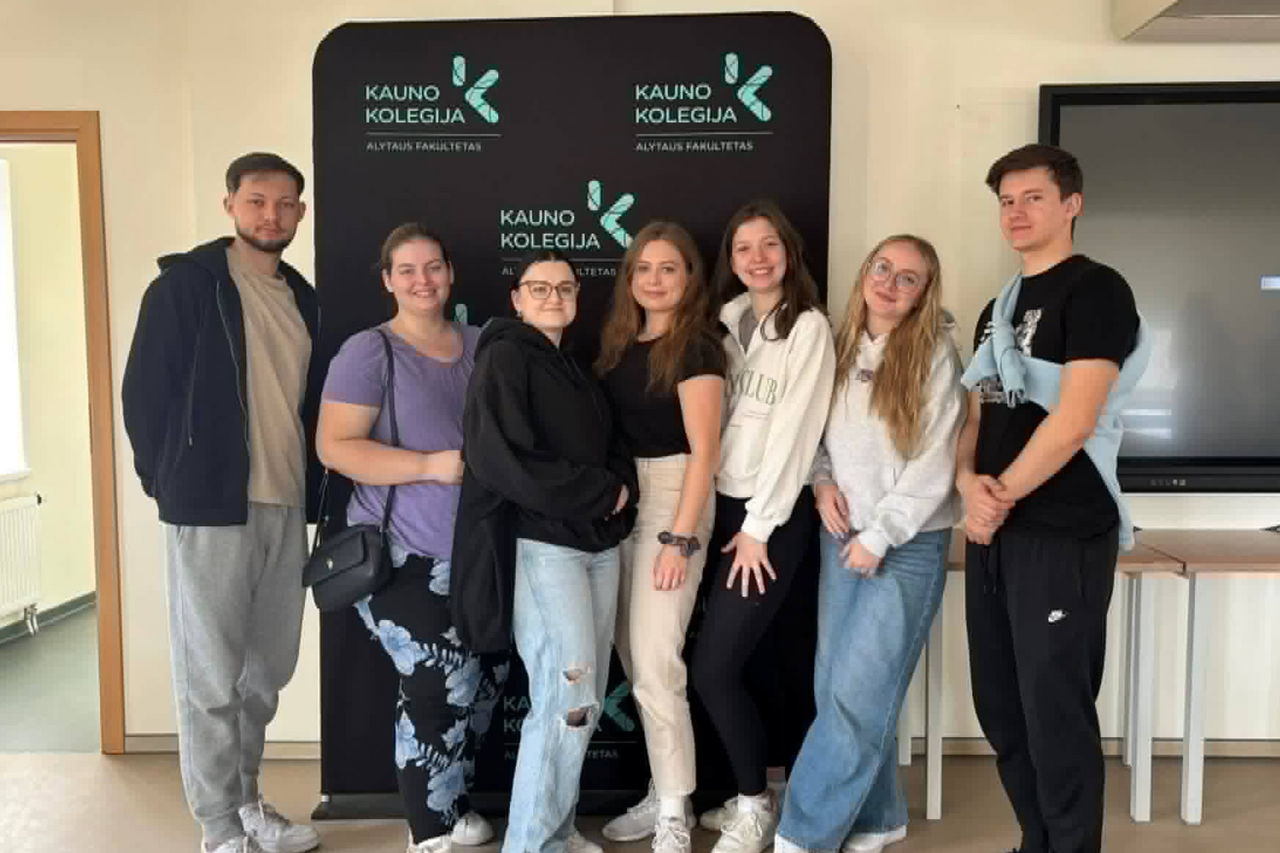
International cooperation, exchange of experiences, and a practical approach to patient care in different parts of the world, this is how students from the Faculty of Health Sciences at University of Lomza spent their time during the Blended Intensive Programme “Overcoming Cultural Issues in Patient Care”, organized in Alytus, Lithuania, in cooperation with Kauno kolegijos Alytaus fakultetas.
The programme focused on patient care in the context of cultural diversity and the challenges faced by healthcare professionals in today’s multicultural environment. Students from Poland, Latvia, and other European countries participated in lectures, workshops, and study visits that allowed them to explore nursing and healthcare from an international perspective. Among the invited speakers were Chidinma Florence Uwaomy from Nigeria, who discussed the realities of nursing in different cultural settings, and Dr. Bin Zhang from Kanagawa University, who presented the possibilities of using robotics in transcultural nursing.
An important part of the programme included visits to healthcare and wellness institutions. Students visited Alytus County S. Kudirkos Hospital, where they attended sessions on hospital services tailored to diverse patient needs, safe nursing procedures, and infection control. Part of the programme also took place in well-known Lithuanian spa resorts such as Druskininkai and Birštonas. During a visit to the renowned rehabilitation centre “Tulpė”, participants had the opportunity to observe approaches to rehabilitation and wellness used in Lithuanian healthcare institutions and compare them with practices from other countries.
The mobility programme was not limited to academic activities only. Participants also took part in cultural and integration activities aimed at developing intercultural communication and teamwork skills. Students attended sessions focused on language and cultural barriers in nursing, visited the Tarzanija Adventure Park and the historic Dzūkų dvaras, where they learned about local traditions and traditional methods of preparing regional dishes.The programme concluded with presentations of projects prepared in international groups. Students summarized the knowledge they had gained, shared their experiences, and reflected on the results of their week-long cooperation. The official closing ceremony and farewell lunch created an opportunity for conversations, reflections, and final summaries after an intensive yet highly valuable week in Lithuania.
Participation in the programme demonstrated how important openness to cultural diversity, communication skills, and international cooperation are in healthcare professions. For the students of the University of Lomza, it was not only a valuable educational and professional experience, but also an opportunity to build international relationships and develop competencies that will benefit them in their future careers.